
Bearing Capacity Testing with Plate Load Tests and Loadman
Plate Load Testing and Loadman – reliable bearing capacity testing for your project
At Ostromap, we offer plate load testing and Loadman tests as part of our bearing capacity testing services. Our plate load tests allow us to assess the ground’s bearing capacity and deformation characteristics, as well as determine material properties such as degree of compaction and E-values. This provides a reliable basis for foundation design and future construction.
We perform both static plate load tests and Loadman tests, a lightweight falling weight test that can be used in situations where conventional equipment requiring a counterweight is not suitable. Both methods provide reliable results, which we carefully document and map to give you a comprehensive picture of the ground conditions.
Our experienced measurement consultants help you assess ground bearing capacity and provide reliable data for informed decision-making, whether your project involves buildings, roads, industrial developments or infrastructure.
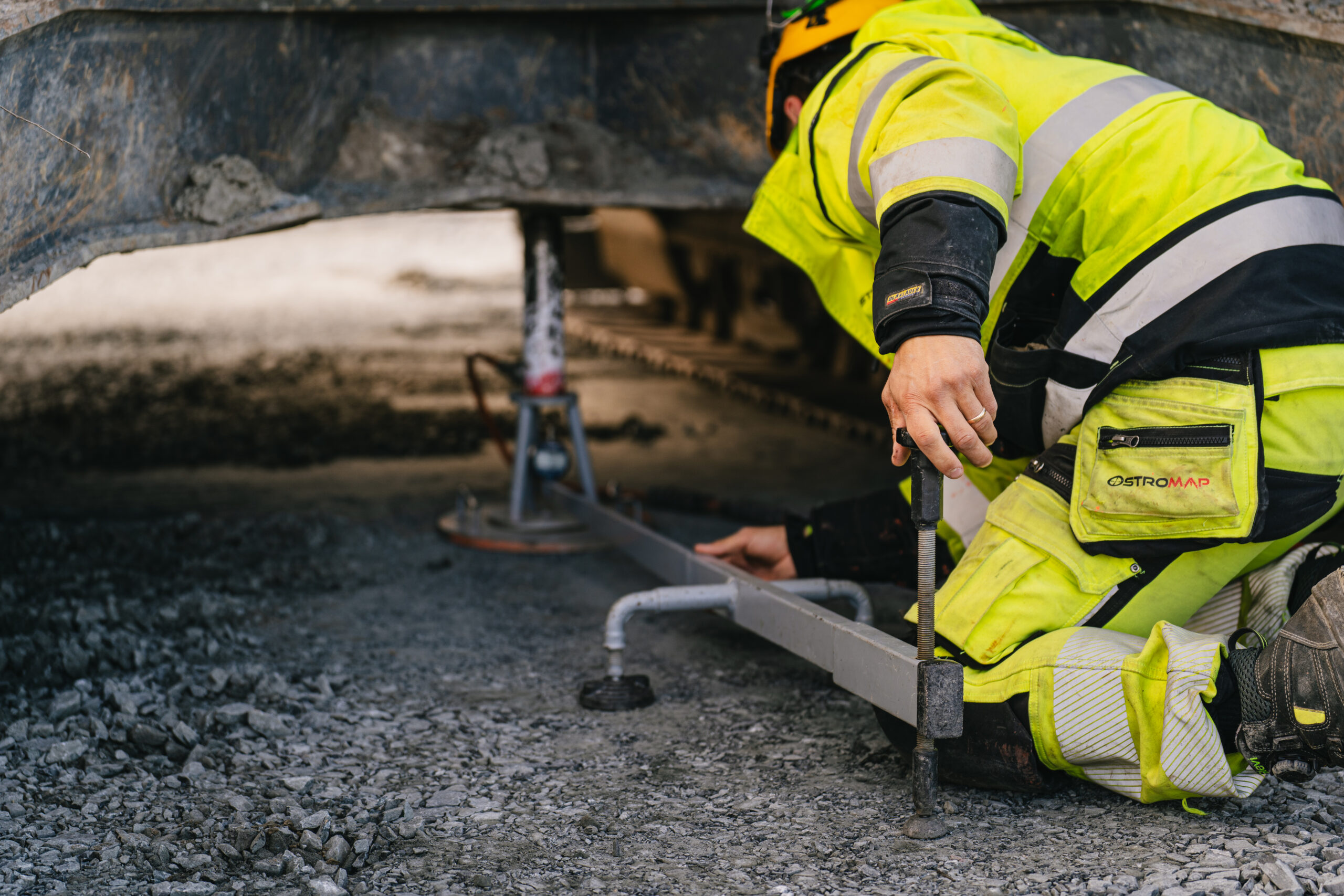
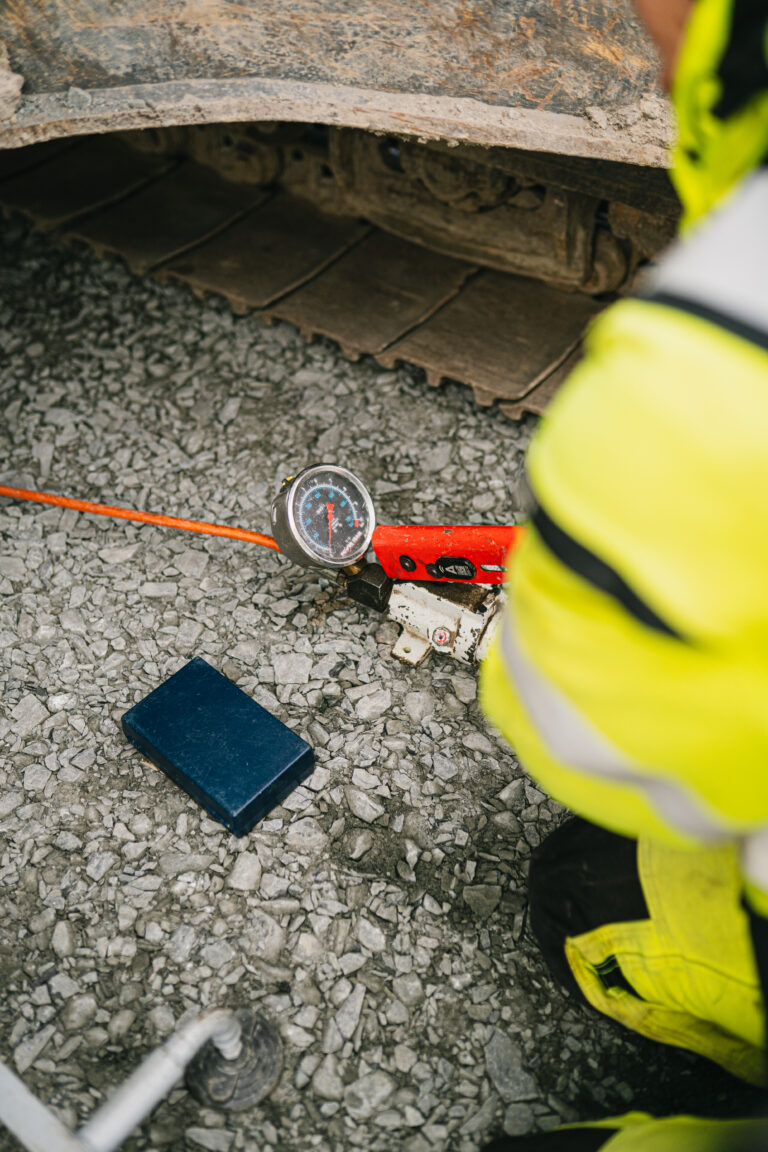
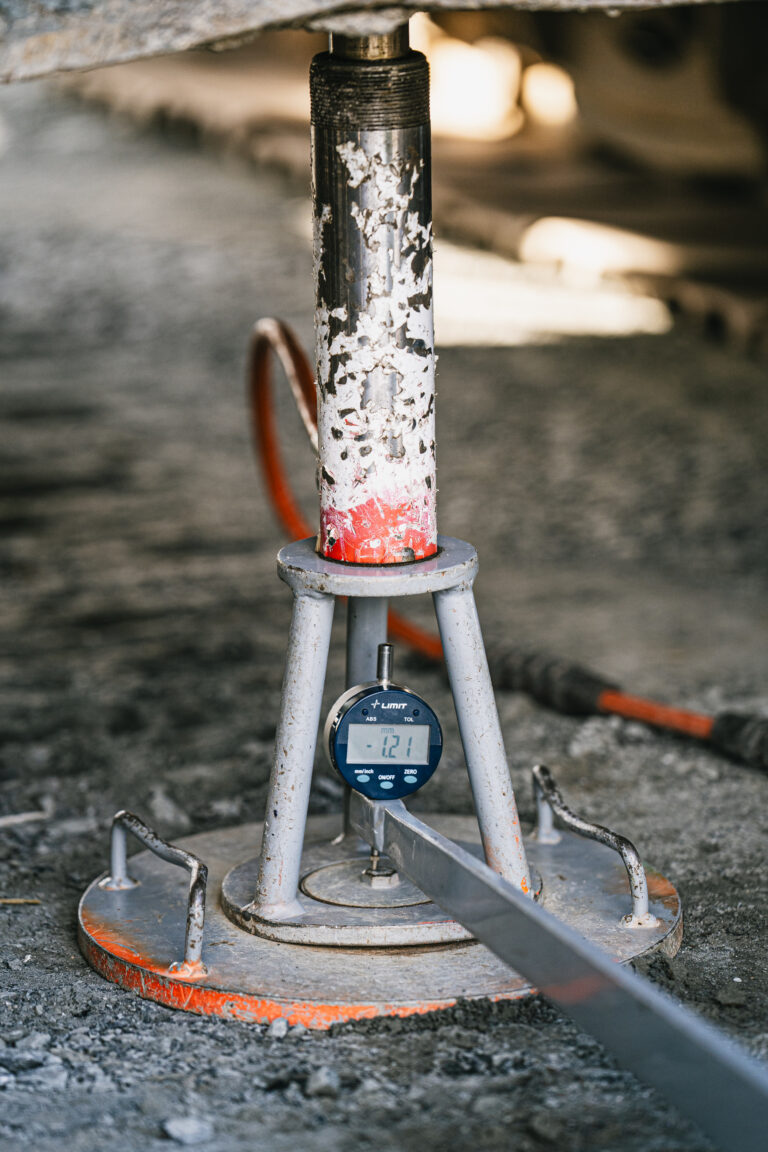
Plate Load Testing – Assessing Ground Bearing Capacity
Plate load testing is a proven and established method for assessing ground bearing capacity and material properties. The test provides a reliable basis for the design and construction of buildings, roads and other structures, while helping identify areas that may require reinforcement.
During a plate load test, we place a circular loading plate directly on the ground surface and apply load incrementally using a hydraulic jack under controlled conditions. Throughout the test, we measure settlement and determine the degree of compaction and the ground’s deformation properties (E-modulus). The relationship between these values helps determine whether the ground has sufficient bearing capacity for the intended construction.
Loadman – Fast and Efficient Bearing Capacity Testing
Loadman is a lightweight falling weight test used to assess ground bearing capacity and material properties without the need for counterweight equipment. This makes it particularly practical in locations where conventional testing equipment is difficult to use. The method can be used for a wide range of projects, from residential and industrial buildings to roadworks and pipeline construction. It provides values for the degree of compaction and deformation properties of the ground, with the relationship between these values indicating whether the ground has sufficient bearing capacity for the intended construction.
During the test, a 10 kg weight is repeatedly dropped onto the ground, while the resulting settlement is measured to determine the material’s properties. We document the test results using coordinates or map images, providing reliable data for project planning and decision-making.
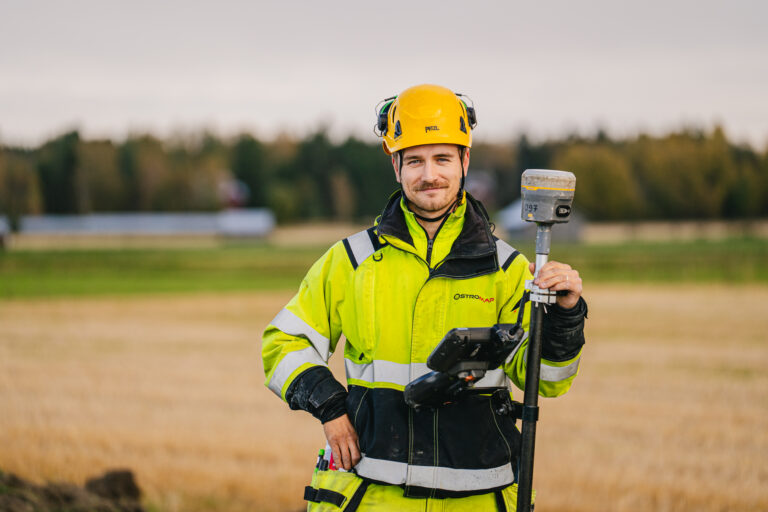
Supporting You Throughout the Entire Project
At Ostromap, we offer comprehensive services that allow us to support your project from the early planning stages through to completed construction. Our experienced measurement consultants handle both surveying and bearing capacity testing, ensuring a smooth and coordinated process. This gives us a better understanding of your project while providing reliable results you can depend on throughout the entire process.
Would you like to learn more or order a bearing capacity test? Contact Henrik at henrik.aho@ostromap.fi or call +358 50 490 2087 for personal advice and a quotation.
Applications of Static Plate Load Testing and Loadman
Our plate load tests provide clear and reliable information about ground bearing capacity and quality, making them an important part of geotechnical site investigations. The results provide a sound basis for decision-making, help reduce risks and contribute to safer projects – whether you are working on buildings, roads or infrastructure projects.
Building and Industrial Foundations
Verify that the ground can withstand the loads from houses, industrial halls and other buildings.
Road and Civil Engineering Projects
Assess ground stability before constructing roads, parking areas and other paved or engineered surfaces.
Fill and Backfill Projects
Ensure stable ground conditions when constructing pipelines and deep excavations.
Pipelines and Excavation Bases
Ensure stable ground conditions when constructing pipelines and deep excavations.
Planning and Design
Identify areas that may require ground improvement or adjustments before construction begins.
Frequently Asked Questions About Plate Load Testing and Bearing Capacity Testing
Here, we have compiled answers to the most frequently asked questions about plate load testing, Loadman testing and geotechnical site investigations. Our aim is to provide clear information about how the tests are carried out, what the results show and how they can be used in your project, so you can make informed decisions with confidence before ordering a bearing capacity test.
When Is Plate Load Testing Used?
Plate load testing is used to verify that the ground can withstand the loads imposed by buildings, roads and other structures. The results provide valuable information that helps project managers plan and carry out construction projects safely and with confidence.
- Assessing ground bearing capacity for road construction and civil engineering projects
- Verifying the quality of excavations, fill materials and subgrade materials
- Assessing bearing capacity before asphalt paving or casting concrete structures
- Verifying ground bearing capacity in accordance with client requirements, contractual boundaries or as part of project handover
How Is Static Plate Load Testing Carried Out?
During a static plate load test, we place a circular plate, typically 300 mm in diameter, directly on the ground or foundation footing. We apply a controlled load using a hydraulic jack and measure settlement at different load levels. Based on the results, we determine the ground’s bearing capacity, degree of compaction and deformation properties. The relationship between these values indicates whether the ground has sufficient bearing capacity for the intended construction.
A counterweight, such as an excavator, roller or wheel loader, is typically used to provide the required reaction force. The method is primarily used beneath foundation footings for houses and industrial halls, but is also commonly used in road construction and other civil engineering projects where ground stability needs to be verified.
What Is Loadman and What Is the Method Used For?
Loadman is a lightweight falling weight test used to assess ground bearing capacity and material properties without the need for counterweight equipment. The method involves repeatedly dropping a 10 kg weight onto the ground and measuring the resulting settlement to determine E-values and the degree of compaction.
Loadman is often used where conventional plate load testing equipment is difficult or impossible to use, such as in excavation bases, along pipeline routes or in other confined spaces. Loadman test results provide a clear overview of ground stability and serve as reliable data for planning, quality control and safe construction.
What Do E1, E2 and E2/E1 Mean?
E1 and E2 are values obtained from plate load tests or Loadman tests. E1 indicates the ground’s response during the initial loading cycle, while E2 represents the material’s deformation properties (E-modulus) during the subsequent loading cycle. The E2/E1 ratio indicates how the ground responds to repeated loading and is used to assess compaction and bearing performance. Together, these values provide a clear picture of the ground’s material properties, degree of compaction and stability.
What is meant by a geotechnical site investigation?
A geotechnical site investigation is an assessment of the ground’s properties and bearing capacity carried out before construction and civil engineering projects. The aim is to understand how the ground responds to loading and to provide a sound basis for safe foundation design, road construction, earthworks and other structures.
Methods commonly included in a geotechnical site investigation include:
- Plate load testing to assess ground deformation and determine E-values
- Loadman testing, a lightweight falling weight test suitable for excavation bases and pipeline routes
- Soil sampling and laboratory analysis
- Boreholes and cone penetration testing (CPT)
- Excavation inspections and visual assessment of soil layers
The purpose of combining these methods is to build a comprehensive understanding of the ground’s composition, bearing capacity and stability. By combining different types of testing, foundations and civil engineering structures can be designed and constructed safely and cost-effectively, while reducing the risk of settlement and other problems in the future.
How Long Does a Bearing Capacity Test Take?
Yes. Both plate load tests and Loadman tests are carried out in accordance with established standards for geotechnical investigations. At Ostromap, we perform our tests in accordance with Finnish standards for infrastructure construction.
Are the Tests Standardised?
Ja, både plattbelastningstest och Loadman-prov utförs enligt etablerade standarder för geotekniska markundersökningar, och vi på Ostromap utför proven enligt finska standarder för infrabyggande.
Contact us for professional bearing capacity testing!
Henrik Aho
+
Sales and development manager
Daniel Ruutikainen
+
Measurement services
Oulu, Northern Finland
André Hagman
+
Measurement services
Pietarsaari, Western Finland
Kim Tuorila
+
Measurement services
Vaasa, Western Finland